
Pediatric Care
Drug-Free Pediatric Chiropractic
Most parents who find us have already tried everything else. They've been to the pediatrician, the specialist, the therapist. Nobody looked at the nervous system. That's where we start.
Why we look at the nervous system first
When a child has ADHD, colic, sensory meltdowns, chronic ear infections, or sleep problems, the standard response is to manage the symptom. Medication for attention. Antibiotics for the ear. A sleep aid for the night waking.
We ask a different question: why is the nervous system producing this pattern in the first place?
The nervous system controls everything. When it's stuck in a stress response, the body can't regulate sleep, digestion, immune function, or behavior. That's not a character flaw or a chemical imbalance. It's a nervous system that needs help getting out of a pattern it got stuck in.
That's what we do. We measure the pattern with the INSiGHT neurological scan, identify where the stress is concentrated, and use specific, gentle adjustments to help the nervous system regulate. No medication involved.
What families come to us for
These are the most common patterns we see. Most families have already tried other approaches before they find us.
ADHD and attention challenges
When the prefrontal cortex is under-firing and the brainstem is in a stress response, focus and impulse control suffer. Medication addresses the symptom. We look at what's driving the nervous system pattern.
Read more about thisAutism and sensory processing
Sensory overload, meltdowns, and social withdrawal are often signs of a nervous system stuck in high alert. Calming that pattern changes what the child can access.
Read more about thisColic and reflux
Inconsolable crying and reflux in infants are almost always a nervous system signal. The gut and the brain are connected by the vagus nerve. When that connection is under stress, digestion suffers.
Read more about thisChronic ear infections
Recurring ear infections are often tied to lymphatic drainage and Eustachian tube function. Specific adjustments to the upper cervical spine can change the drainage pattern.
Read more about thisSleep issues
A child who can't settle or stay asleep is usually running on a nervous system stuck in sympathetic dominance. Bringing that down is where the real sleep change comes from.
Read more about thisImmune challenges
Frequent illness is often tied to nervous system stress. When the body is in a chronic stress response, immune function is suppressed. That's not a supplement problem. It's a regulation problem.
Read more about this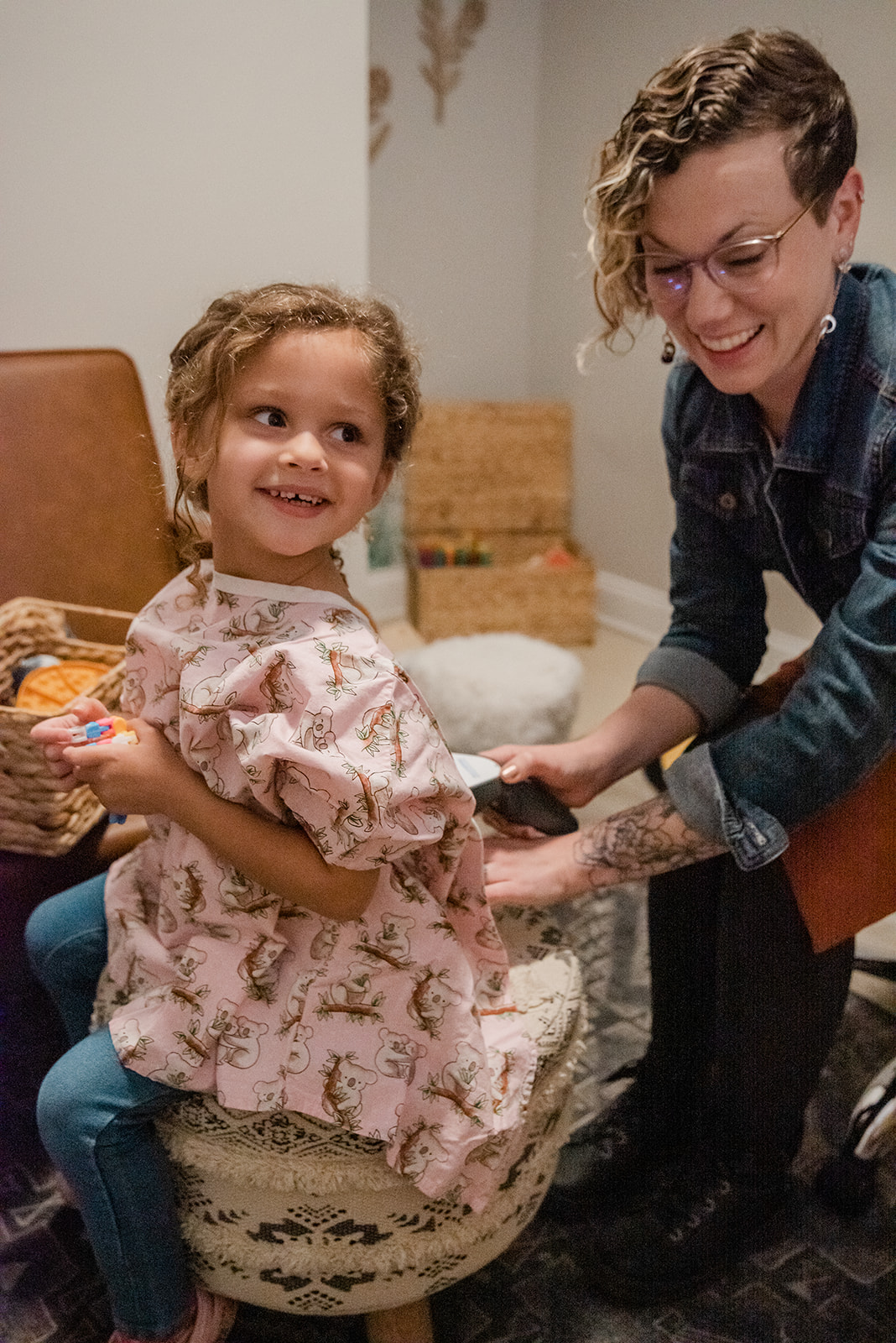
The Scan
We measure before we recommend anything
The INSiGHT scan is a three-part, non-invasive assessment that measures how the nervous system is regulating. It looks at heart rate variability, muscle tension patterns along the spine, and thermal asymmetry.
Heart rate variability tells us how well the body is adapting to stress. Muscle tension shows us where the nervous system is compensating. Thermal asymmetry reveals where nerve function is disrupted.
Together, they give us an objective picture of where the stress is concentrated. That's what makes the care specific instead of generic.
Safe for newborns from day one. No radiation, no needles, no discomfort.
CACCP Certified
200 hours of specialized pediatric training
CACCP stands for Certified by the Academy Council of Chiropractic Pediatrics. It requires 200 hours of post-doctoral training in pediatric neurology, development, and assessment. Dr. Devin is one of the only CACCP-certified chiropractors in the Knoxville area.
It's not a wall decoration. It means the assessment and care your child receives is built on a foundation that most chiropractors don't have.
What CACCP means for your childQuestions parents ask before the first visit
Is chiropractic care safe for children without medication?
Yes. Pediatric chiropractic adjustments use very light pressure, about the same as checking a tomato for ripeness. We don't use the same techniques on children that we use on adults. The goal is to reduce nervous system stress, not to manipulate joints the way you'd see in adult care.
Can chiropractic care replace my child's medication?
We don't tell families to stop any medication. That's a conversation between you and your prescribing doctor. What we do is look at the nervous system patterns that may be driving the symptoms, and address those directly. Many families find that as nervous system function improves, they're able to have a different conversation with their doctor about medication.
How young can a child start care?
We see children from day one of life. The birth process, even in uncomplicated deliveries, puts significant stress on the upper cervical spine and brainstem. Early assessment and care can make a real difference in how a child develops.
What does a first visit look like for a child?
We start with a full consultation where you tell us the whole story. Then we run the INSiGHT neurological scan, which is non-invasive, uses no radiation, and takes about 15 minutes. We schedule a separate Report of Findings to walk you through what we found before recommending anything.
Do you work with children who have a diagnosis?
Yes. We see children with ADHD, autism, sensory processing disorder, anxiety, and other diagnoses regularly. We don't treat the diagnosis. We assess and address the nervous system patterns that are making it harder for the child to regulate, focus, sleep, and connect.
What is the INSiGHT scan and why does it matter for kids?
The INSiGHT scan measures heart rate variability, muscle tension patterns, and thermal asymmetry along the spine. Together, these give us an objective picture of where the nervous system is under stress. For children, this is especially useful because they can't always tell you where they hurt or what feels off.
More questions?
Read the full FAQReady to come in?
Most families wish they'd come in sooner.
The first visit is a conversation and a scan. We tell you what we find before we recommend anything. Call us at (865) 671-0359 or book online.