What's Actually Going On in Your ADHD Child's Nervous System (And What Helps)
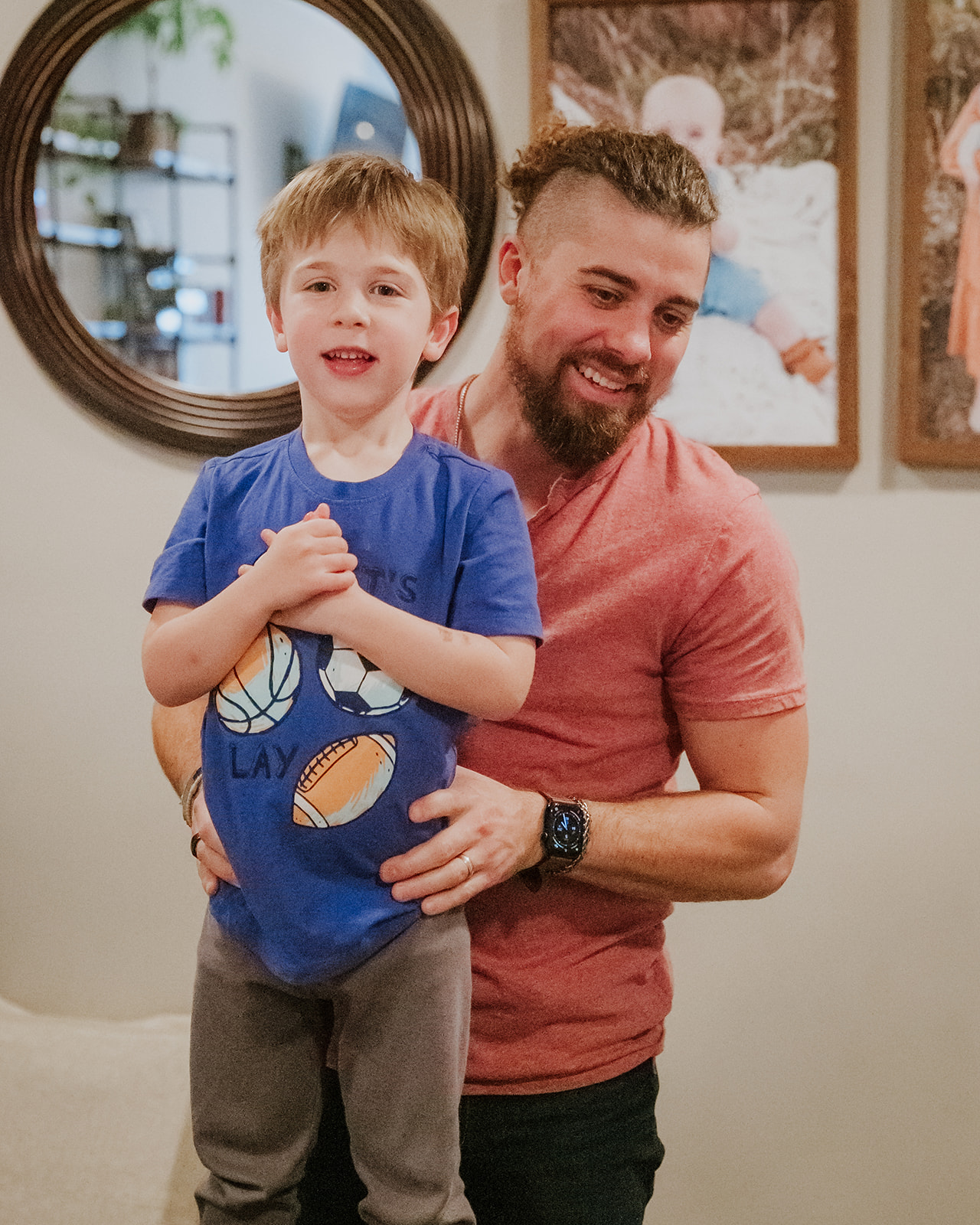
Hey parents. Raising a child with ADHD is a lot. You love them with everything you have and would move mountains for them, but some days you are just trying to survive until bedtime. The meltdowns, homework battles, repeated conversations, calls from school, guilt, exhaustion, and constant wondering if you are doing enough are real. You are doing enough. You are doing so much, and we see you.
At Reissing Health in Knoxville, we work with many families navigating ADHD. Often, parents tell us, "I didn't even know this was a thing." They've tried everything: evaluations, therapy, medication discussions, diet changes, and supplements. Somewhere along the way, someone mentioned chiropractic care, and they thought, why not. Then, significant changes occurred.
We want to explain what we actually do, why it works, and what is truly happening in your child's nervous system. You deserve real answers, not just a prescription and a pamphlet.
ADHD Is a Nervous System Issue. Full Stop.
Here is something that does not get said clearly enough: ADHD is not a behavior problem. It is not a parenting problem. It is not a willpower problem. It is a nervous system problem. When you understand that, everything else starts to make a lot more sense.
The brain of a child with ADHD processes dopamine differently. The prefrontal cortex, the part of the brain responsible for focus, impulse control, planning, and emotional regulation, does not receive the consistent neurological input it needs to function optimally. The nervous system is dysregulated. It is either stuck in a high-alert, stress response state that makes it nearly impossible to sit still and focus, or it is under-stimulated and desperately seeking input just to feel awake and engaged. Sometimes it is both, in the same child, on the same day.
What causes that dysregulation? For many children, it starts earlier than you might think. Birth trauma, a long or difficult labor, forceps or vacuum delivery, a C-section, or a cord around the neck, all of these can create tension and subluxation in the upper cervical spine that interferes with the nervous system's ability to regulate itself. Add in the stress of growing up in a busy, overstimulating world, and you have a nervous system that is working overtime just to keep up.
What Chiropractic Care Actually Does for ADHD
We want to be very clear here because we know this is new for many families: we are not treating ADHD as a diagnosis. We are not claiming to cure anything. What we are doing is finding and removing interference in the nervous system, specifically the areas of the spine where subluxation is creating static in the communication between the brain and the body. We then gently and specifically correct that interference so the nervous system can function as it was designed to.
Think of it like this: if you have a garden hose with a kink in it, the water pressure downstream will be inconsistent no matter how much you crank up the faucet. The kink is the problem. Chiropractic adjustments remove the kink. When the nervous system is communicating clearly, when the brain is getting the input it needs and the body is responding appropriately, children with ADHD often experience significant improvements in focus, impulse control, emotional regulation, sleep, and overall behavior. This is not because we fixed their brain, but because we removed the interference that was making it harder for their brain to do its job.
We use INSiGHT scanning technology to assess your child's nervous system before we ever perform an adjustment. This technology is completely safe, non-invasive, and gives us an objective picture of where stress and dysregulation are concentrated in your child's nervous system. We do not guess. We measure, we know, and we adjust accordingly. We use that same technology to track progress over time so you can actually see the changes happening, not just feel them.
What Parents Tell Us After Starting Care
We could give you a lot of clinical language here, but honestly, the most powerful thing we can share is what we hear from parents. "He slept through the night for the first time in years." "Her teacher pulled me aside to ask what changed." "He is so much calmer, like, genuinely calm, not just medicated calm." "She can actually sit and do homework now without it turning into a battle." "I feel like I have my kid back."
These are not outliers. These are patterns we see repeatedly when we remove interference from the nervous system and give the brain the clear communication it needs. We are not the only ones seeing it; research published in peer-reviewed journals has documented improvements in ADHD-related behaviors following chiropractic care, with parents and teachers reporting significant reductions in hyperactivity, inattention, and emotional dysregulation.
We also want to say this: chiropractic care is not a replacement for other interventions your child may be receiving. If your child is working with a behavioral therapist, an occupational therapist, a speech therapist, or a pediatrician, that is excellent, and we want to be part of that team. When the nervous system is functioning with less interference, children tend to respond better to all the other work they are doing. We complement everything else. We do not compete with it.
The Connection Between ADHD and Sensory Processing
One thing we see consistently in children with ADHD is that sensory processing challenges are almost always part of the picture too. The same nervous system dysregulation that makes it hard to focus and regulate impulses also makes it hard to filter and respond to sensory input appropriately. Your child might be hypersensitive to sound, touch, or certain textures. They might crave intense physical input, crashing, jumping, spinning, just to feel regulated. They might have a really hard time in busy, stimulating environments like school cafeterias, birthday parties, or grocery stores.
This is not a coincidence. It is the same root issue showing up in different ways. It is one of the reasons we see such significant results with neurologically-focused chiropractic care, because we are addressing the underlying nervous system dysregulation that drives both the ADHD symptoms and the sensory challenges at the same time. If this sounds familiar, you might also want to read our post on what parents in Knoxville need to know about SPD and the nervous system.
What to Expect at Your Child's First Visit
We know that bringing a child with ADHD into a new environment can feel like a gamble. New places, new people, new routines, it can be a lot. We understand. We want you to know that we have thought of every single detail to make this experience as smooth and comfortable as possible for your family.
When you walk through our doors, you will be welcomed by our team. Ashley will give you a full tour of our space so your child knows exactly what to expect before anything happens. We have a fun, designated kids area where your little one can explore and just be a child. No sitting still required, no worrying about what they are getting into. We have thought of every detail in this space to make it feel safe and welcoming, especially for children who are sensitive to new environments.
Your child's first visit includes a thorough health history, the INSiGHT nervous system scan, and a full explanation of exactly what we find and how we plan to help. Our doctors take the time to actually connect with your child, not rush them through. They will get down on their level, meet them where they are, and make sure the whole experience feels positive. We have had children who were terrified of doctors leave asking when they can come back. That matters to us more than anything.
The adjustments themselves are incredibly gentle and specifically adapted to your child's age, size, and nervous system state. For most children with ADHD, we focus especially on the upper cervical spine, the top of the neck, and the sacrum, which are the two areas most commonly involved in the nervous system dysregulation patterns we see. The adjustment takes just a few minutes, and most children barely notice it is happening.
How Often Does My Child Need to Come In?
Every child is different, and we will always build a care plan that fits your family's specific needs, schedule, and goals. In general, we recommend an initial phase of more frequent care, typically two to three visits per week for the first four to six weeks, to build momentum in the nervous system and start shifting the patterns of dysregulation. From there, we reassess using the INSiGHT technology and adjust the plan based on what we see.
Most families start noticing changes within the first few weeks of care. Some see shifts even faster than that. The timeline depends on how long the nervous system has been under stress, how significant the subluxation patterns are, and what else is going on in your child's life. We will be honest with you every step of the way about what we are seeing and what to expect.
You Are Not Alone in This
We want to say something to every parent reading this who has spent years feeling like they are fighting this battle by themselves. You are not alone. You are not failing your child. You are not missing something obvious. ADHD is complex, the nervous system is complex, and the healthcare system does not always make it easy to find the right support.
But we are here. We have a tribe of families in this community who have been exactly where you are and who are now on the other side of it, with children who are thriving, sleeping, learning, and just being the incredible little humans they were always meant to be. We would be honored to walk alongside your family.
Finding a Pediatric Chiropractor for ADHD in Knoxville
If you are searching for a pediatric chiropractor in Knoxville or Farragut who specializes in ADHD and nervous system care, the most important credential to look for is CACCP certification through the ICPA. This is the highest level of training available in pediatric chiropractic care, and it means your child's provider has specific, advanced training in neurologically-focused care for children.
At Reissing Health, both of our doctors are CACCP certified and have worked with hundreds of children across the Knoxville area with ADHD, sensory processing challenges, autism, developmental delays, and nervous system dysregulation. We understand what your family is going through. We understand that every child is different. We are committed to making this the most supportive experience your family has ever had in a healthcare setting.
Call us at (865) 671-0359 or request an appointment online. We will get you in quickly, take care of your child like they are our own, and make sure your whole family feels supported every single step of the way.
Your child is incredible. Their nervous system just needs a little help keeping up with them. We are so ready to help make that happen.
Want to understand the deeper root cause behind why so many children struggle with ADHD, sensory challenges, and chronic health issues? Read The Real Reason Why Your Child Is So Sick to learn about the Perfect Storm and how the nervous system connects it all.
For a complete overview of pediatric chiropractic care in Knoxville and Farragut, including what it is, which children benefit most, and what to expect at Reissing Health, read our pillar post Pediatric Chiropractor Knoxville: What It Is, Who It's For, and Why It Works.
For more on how we approach pediatric care at Reissing Health, see our pediatric chiropractic care page.
Related Service
Explore Family Wellness Care
Read More on This Topic
Explore Reissing Health
Written & Reviewed By
Dr. Devin Reissing, DC, CACCP
Dr. Devin Reissing is a CACCP-certified pediatric and prenatal chiropractor and PX Docs provider in Farragut, TN. He specializes in neurologically-focused chiropractic care for children with sensory processing challenges, ADHD, autism, colic, and developmental delays, as well as Webster-certified prenatal care.
View Full Bio →Have questions before you book?
Most families who find us have already tried everything else. If you're ready to look at the nervous system, we're here.